
Bookkeeping Services in Livingston, MT:
Books Built for a One-Season Economy
Livingston makes much of its year in the Yellowstone summer, then has to carry the winter. Here's what a seasonal tourism or hospitality business needs from its books — cash reserves, lodging tax, seasonal payroll and tips — from a Montana firm that gets seasonal business.

There's a rhythm to running a business in Livingston that anyone who's done it knows in their bones. July is glorious — the Yellowstone gateway is packed, the river's busy, Main Street is full, and money is coming in faster than you can count it. Then the tourists thin out, the wind picks up, and by February you're staring at a bank balance that has to somehow carry you to the next season. The businesses that thrive here aren't the ones that have great summers. They're the ones whose books told them, back in August, exactly how much of that summer money had to survive the winter.
That's what bookkeeping has to do for a Livingston business, and it's not what a generic monthly bookkeeper is built for. When your year is really one big season plus a long off-season, month-to-month statements miss the whole story. You need books that think in seasons: what the summer actually cleared after the real costs, how much to reserve for the lean months and the tax bill, and whether you're pricing and staffing for the year — not just for a good July.
This guide covers what a seasonal Livingston business needs from its books — cash reserves, lodging tax, seasonal payroll and tips, and Montana's tax basics — plus the industries that define Park County and how a remote firm delivers all of it. If you're weighing whether you've outgrown DIY books, this is the place to start.
By Jason Anderson — Co-Founder, 406 Consulting Group. Background in large-scale operational finance at BP before building financial infrastructure for Montana small businesses, where seasonal cash planning, payroll, and keeping the books ahead of the next season are everyday work.
Quick Answer: Bookkeeping for a Seasonal Livingston Business
- →Think in seasons, not months: the real question is whether the summer cleared enough to carry the winter.
- →Off-season reserve: books should tell you what to set aside for lean months and taxes while cash is flowing.
- →Lodging tax: short-term stays carry Montana's ~8% lodging tax — know what platforms collect and what's still yours.
- →Seasonal payroll & tips get complicated fast when you ramp a summer crew — worth getting right.
- →No general sales tax in Montana — but a state income tax most owners pay through quarterly estimates.
Table of Contents
Why a Seasonal Economy Changes the Books
The short answer: most bookkeeping is built around the month — this month's revenue, this month's expenses — but a Livingston tourism or hospitality business earns its whole year in a few big months. Reading a single month in isolation tells you almost nothing; the number that matters is what the season produced and how far it has to stretch.
Picture a Livingston restaurant that does 60% of its annual sales between June and September. In July, the P&L looks incredible. In March, the same statement looks like a business in trouble — but it isn't; it's just the off-season, and that swing is normal and expected. An owner reading month-to-month lurches between euphoria and panic. An owner whose books are set up for seasonality sees the real picture: what the peak cleared, what the trough costs, and whether the two balance across a full year.
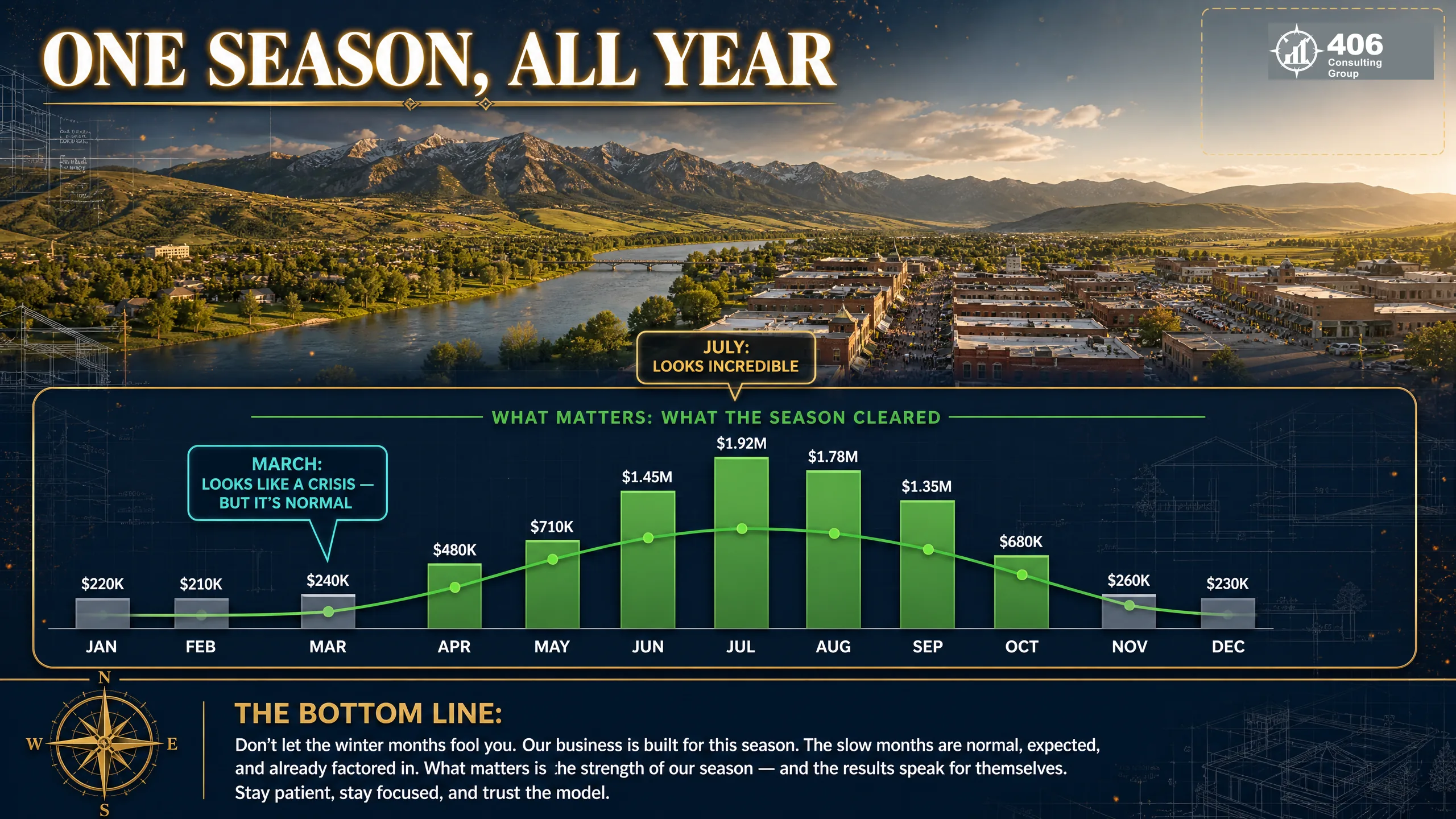
Everything below flows from that one shift. Once the books think in seasons, cash reserves, tax estimates, and staffing all get easier to plan — because you're working from the real annual rhythm instead of reacting to whichever month you happen to be in.
Seasonal Cash & the Off-Season Reserve
The short answer: the single most important thing a seasonal business's books can do is tell you, while the money is flowing, how much of it can't be spent — because it belongs to the winter, the tax bill, and next season's startup costs. Getting this number right is the difference between a calm February and a scramble.
The trap is that a great summer feels like profit. Cash is piling up, so it's tempting to treat it like it's all yours — upgrade the equipment, take the big draw, relax on costs. But a chunk of that pile is spoken for: payroll and rent through the slow months, the income tax that comes due on the summer's earnings, and the cash it takes to reopen and restock before the next season's revenue arrives. Books that are set up for seasonality carve those out explicitly, so what's left is genuinely yours.
Practically, that means a simple annual cash plan: estimate the off-season burn, the tax set-aside, and the reopening costs, then hold that reserve back during the peak. It's not complicated math — it's just math that has to actually get done, in the books, before the good feeling of a full account leads to decisions you regret in January. This is exactly the "profitable but no cash" problem in seasonal form; we break down the general version in Profitable But No Cash.

Lodging Tax & Short-Term Rentals
The short answer: even though Montana has no general sales tax, it does tax short-term lodging — roughly 8% total (a 4% lodging facility use tax plus a 4% lodging sales tax) on stays under 30 days. If you run a hotel, motel, cabin, or short-term rental in the Livingston area, that tax applies, and keeping it straight in your books is not optional.
Where owners get tripped up is the platform question. Booking sites like Airbnb and VRBO generally collect and remit the state lodging taxes on reservations they facilitate — but that doesn't make the money disappear from your books, and it doesn't cover bookings you take directly. You still need to account for what was collected, by whom, and confirm which obligations remain yours. A direct booking you handle yourself, or income through a channel that doesn't collect, can leave you owing tax you never set aside.
The bookkeeping that keeps this clean
Track lodging revenue and lodging tax separately from your other income, note which platform collected and remitted what, and reconcile it every month. Rules and platform behavior change, so verify current rates and what applies to your property with the Montana Department of Revenue. The goal is simple: never be surprised by lodging tax you already spent.
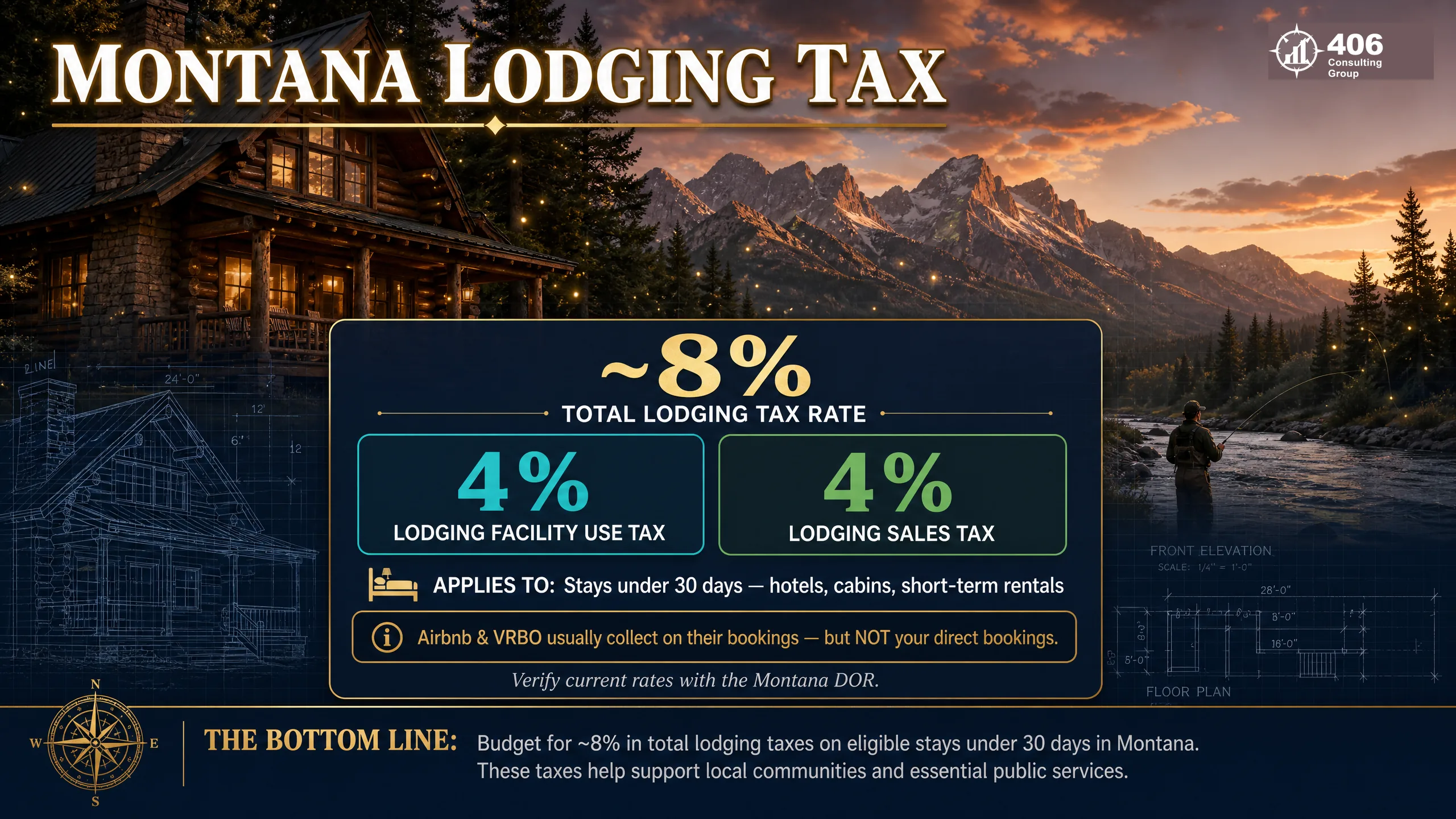
For a short-term rental owner especially, this is the line item most likely to cause a nasty surprise — and the easiest to keep clean once the books are set up for it.
Payroll, Tips & Seasonal Hiring
The short answer: a business that triples its headcount for the summer has a payroll problem most year-round businesses never face — ramping a seasonal crew up and down, handling tips correctly, and keeping workers' comp and withholding right through it all. It's a lot of moving parts packed into a short window.
Hiring a summer crew means onboarding fast, getting everyone set up for withholding, and often managing a mix of full-time, part-time, and short-term help. For restaurants and bars, tips add another layer: tip reporting, tip credits where they apply, and making sure the payroll records hold up if anyone ever asks. Workers' comp has to cover the seasonal staff too, and getting the classifications right keeps a year-end premium audit from turning into a surprise bill. None of this is exotic — but crammed into a busy season, it's exactly what falls through the cracks.
Handled well, payroll is just a clean, repeatable process you run every spring and wind down every fall. That's what our payroll work gives a seasonal business — the ramp handled correctly so you can focus on the season, not the paperwork.
Montana Tax Basics
The short answer: Montana has no general statewide sales tax, which spares Livingston businesses a whole layer of compliance — but there's a state income tax most owners pay through their personal return, and for a seasonal business the timing of those payments takes real planning.
| Tax | How it works in Montana | What it means for you |
|---|---|---|
| General sales tax | None statewide | You don't collect sales tax on most goods and services |
| Lodging tax | ~8% on stays under 30 days | Applies to hotels, cabins, and short-term rentals |
| State income tax | Graduated, top rate around 5.9% | Most owners pay via quarterly estimates on their personal return |
| Payroll taxes | Federal, plus MT withholding & unemployment | Scale up with your summer crew — set up correctly before hiring |
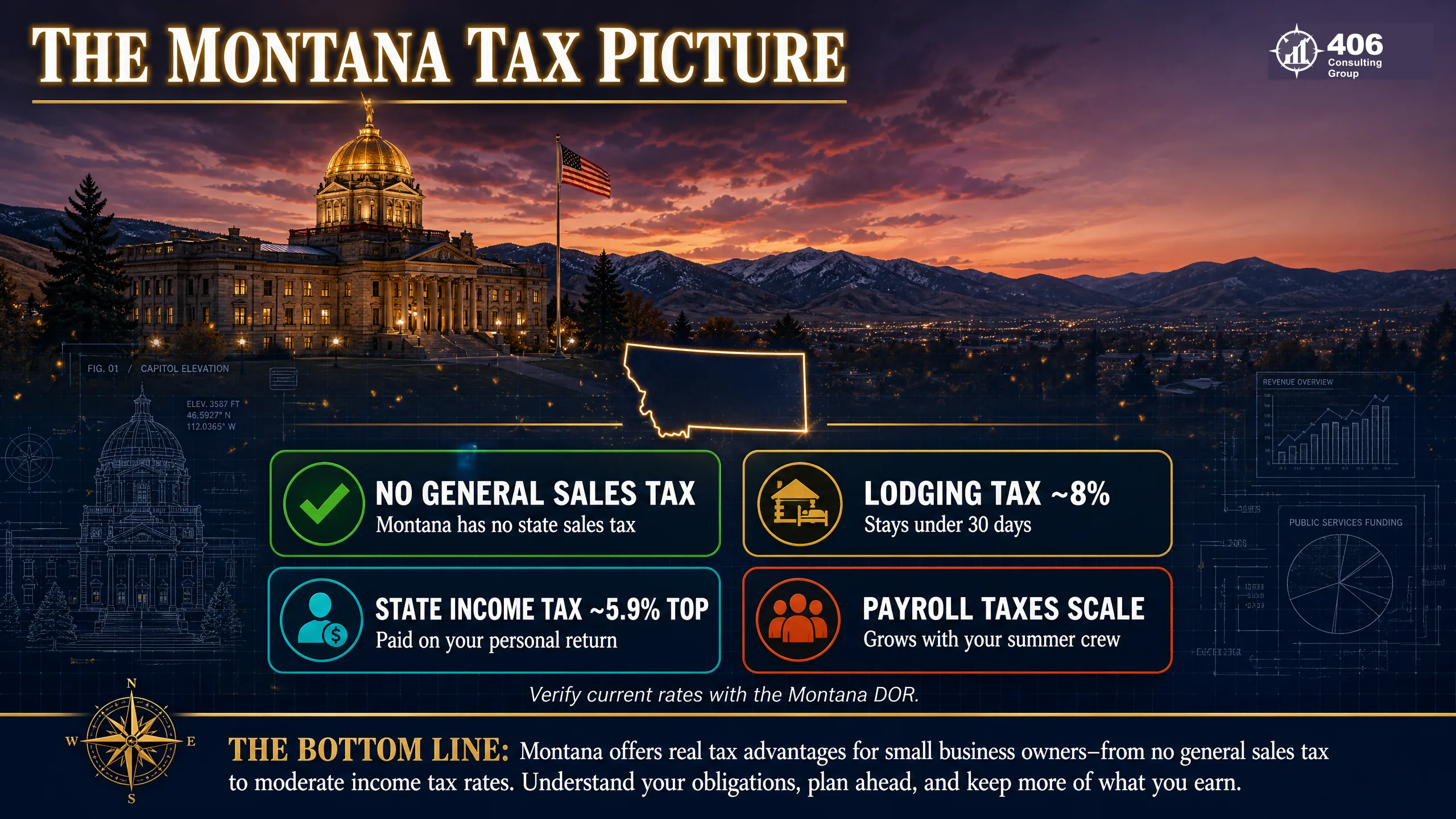
The seasonal wrinkle is quarterly estimates. Your income is lumpy, but the estimate calendar isn't, so a big summer can leave you owing more than a flat quarterly guess assumed. Clean, season-aware books make those estimates accurate instead of a shot in the dark — and set up the deeper tax planning we cover for growing businesses. Always confirm current rates with the Montana Department of Revenue.
Bookkeeping by Livingston Industry
Park County's economy has its own mix, and each corner of it asks something a little different of the books. Here's what tends to matter most.
| Industry | What the books need to track |
|---|---|
| Lodging & short-term rentals | Lodging tax, occupancy, platform vs. direct bookings, cleaning/turnover costs |
| Restaurants & bars | Tips, food/beverage cost, seasonal labor, daily sales reconciliation |
| Outfitters & fishing guides | Deposits and prepaid trips, permits/licenses, gear as assets, guide pay |
| Arts, retail & Main Street | Inventory, seasonal cash swings, consignment, point-of-sale reconciliation |
| Ranching & agriculture | Livestock and equipment, ag-specific costs, uneven income across the year |
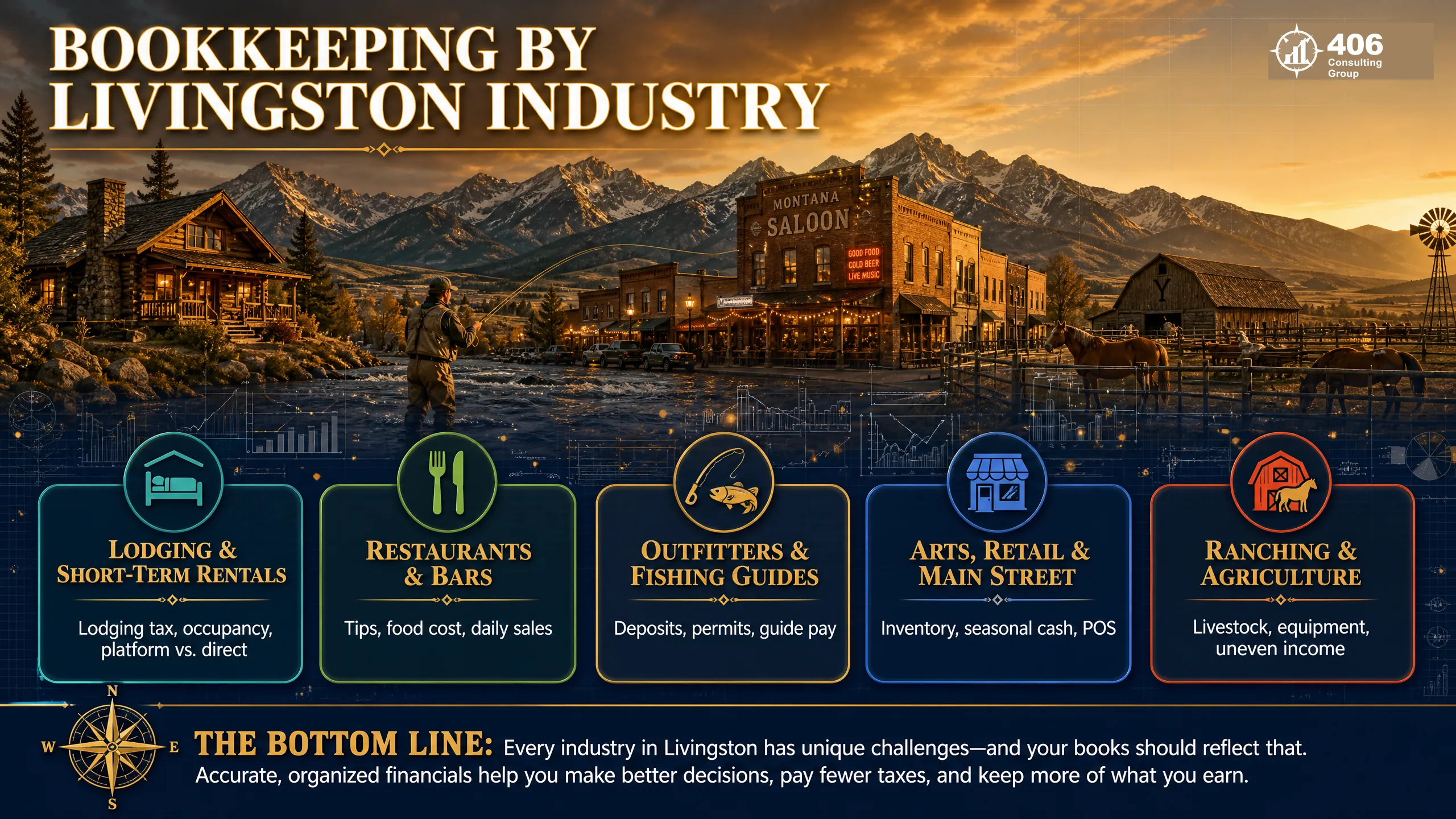
Different details, same backbone: track what actually drives your costs, keep the seasonal cash picture honest, and stay ahead of lodging and payroll obligations. Because our background is in running whole businesses, we set books up around how they affect the entire operation — pricing, staffing, and cash — not just tax-time tidiness.
Local vs. a Great Remote Partner
The short answer: in a town the size of Livingston, the pool of local bookkeepers is small, and the best fit for a seasonal tourism business may not be down the street at all. What matters is whether your bookkeeper understands seasonal cash, lodging tax, and hospitality payroll — not their zip code. A great remote partner beats an okay local generalist.
And this is genuinely how we work with everyone, not a special arrangement for far-flung clients: 70 to 80 percent of the businesses close enough to visit us never do. Their books run through cloud accounting, a secure portal, and a standing video check-in timed to the season. For a Livingston business, that means being in town buys you nothing extra and being out of town costs you nothing — the seasonal-savvy bookkeeping is identical either way, in Park County or anywhere else in Montana.
The work itself is a natural fit for remote. Your sales run through a point-of-sale system and your bank feeds are already digital; secure cloud accounting means your bookkeeper sees the same numbers you do, the same day, from anywhere. The valuable moments — reviewing whether the season is on track, setting the off-season reserve, checking your tax set-aside — happen over a screen share with live data, not across a desk in town. And a remote firm can bring specialized seasonal-business and hospitality experience that a small local pool simply may not offer.
That's how we work with businesses across Montana: cloud-based, responsive, and matched to what your business actually needs. For a Livingston owner, the deciding question isn't how close your bookkeeper is — it's whether they understand a business that lives and dies by the season.
How to Get Started
Getting your books ready for the seasonal rhythm is three steps.
Clean up and set the baseline
Reconcile the accounts and set up a chart of accounts that separates lodging tax, tips, and seasonal costs from everything else.
Build the annual cash plan
Estimate off-season burn, the tax set-aside, and reopening costs — so you know during the peak what has to be held back.
Run it on a rhythm
Monthly reconciliation and a season check-in keep the reserve and estimates accurate, so winter is planned, not survived.
Not sure whether you need bookkeeping, tax help, or something more? Our Financial Maturity Assessment maps it out in about eight minutes.
FAQ: Livingston Bookkeeping Questions
Why does a seasonal business need different bookkeeping?
Because a Livingston tourism or hospitality business earns most of its year in a few big months, so a single month's statement is misleading — July looks incredible, March looks like a crisis, and neither is the real picture. Seasonal bookkeeping thinks in terms of the whole year: what the peak season actually cleared, how much must be reserved for the off-season and taxes, and whether pricing and staffing work across all twelve months rather than just the busy ones.
How much should a seasonal business set aside for the off-season?
It depends on your specific costs, but the method is the same: estimate your off-season burn (payroll, rent, utilities, and other fixed costs through the slow months), add the income tax due on the season's earnings, and add the cash it takes to reopen and restock before next season's revenue arrives. That total is what you hold back during the peak. Season-aware books calculate it explicitly so a great summer doesn't get spent before winter's bills arrive.
Does Livingston or Montana have a sales tax on my sales?
Montana has no general statewide sales tax, so most Livingston businesses don't collect sales tax on goods and services. The major exception is lodging: short-term stays (under 30 days) carry roughly an 8% lodging tax — a 4% lodging facility use tax plus a 4% lodging sales tax. So a hotel, cabin, or short-term rental does deal with a lodging tax, while a typical retail shop or restaurant does not collect a general sales tax.
How does lodging tax work if I use Airbnb or VRBO?
Booking platforms like Airbnb and VRBO generally collect and remit Montana's state lodging taxes on reservations they facilitate. But you still need to account for it correctly in your books, and it doesn't cover bookings you take directly or through channels that don't collect. Track lodging revenue and tax separately, note which platform collected what, and confirm which obligations remain yours with the Montana Department of Revenue — so you're never surprised by lodging tax you've already spent.
Can you handle seasonal payroll and tips for my restaurant?
Yes. Seasonal payroll — ramping a summer crew up and winding it down, onboarding and withholding, workers' comp classifications, and tip reporting for restaurants and bars — is exactly the kind of repeatable process that benefits from being handled properly. Done right, it's a clean routine you run each spring and wind down each fall, rather than a scramble crammed into your busiest months.
Can 406 Consulting Group do my Livingston bookkeeping remotely?
Yes. We work with Livingston and Park County businesses through secure cloud accounting — your point-of-sale and bank feeds are already digital, so we see the same numbers you do, the same day, from anywhere. What matters for a seasonal business is expertise in seasonal cash, lodging tax, and hospitality payroll, not office proximity. A seasonal- and hospitality-savvy remote partner serves you better than a local generalist, and we review your live numbers on a regular rhythm so the season stays on track.
Keep Reading
Bookkeeping — Livingston, MT
Make the Summer Carry the Winter.
406 Consulting Group gives Livingston's seasonal businesses books built for the rhythm — clean cash reserves, lodging tax and tips handled, and a clear read on whether the season paid. Delivered remotely across Montana, by a firm that gets seasonal business.
Livingston Bookkeeping Quick Reference
Livingston, MT — Park County
Books Behind This Season?
Seasonal cash, lodging tax & payroll, handled.
About the Author
Jason Anderson
Co-Founder, 406 Consulting Group
Background in large-scale operational finance at BP before building financial infrastructure for Montana small businesses. Jason helps seasonal Livingston and Park County owners keep the books ahead of the season — clean cash reserves, lodging tax, and payroll that scales with the summer.
Read the Full Story