
The Data Insight That
Changed a Trucking Contract
A trucking client assumed every truck left full. The operating data said otherwise — and revealed a material insight that reshaped its contract. The lesson: financial records get their real power when connected to the operations that drive them.
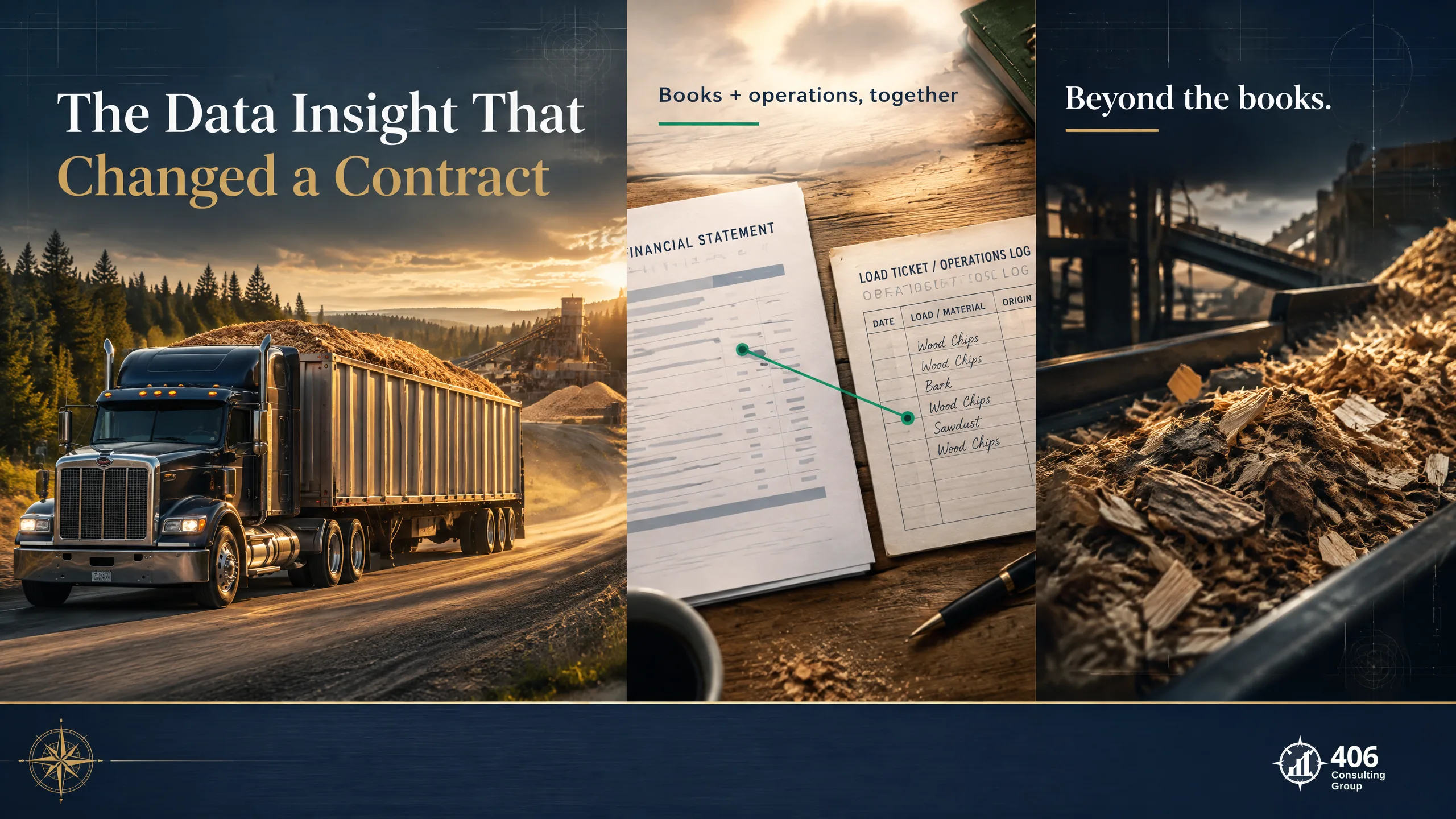
One of the most valuable things we ever do for a client rarely shows up in a tax return. It shows up when the numbers on the page get connected to what's actually happening in the field — and something that everyone assumed was true turns out not to be. This is the story of one such moment with a trucking company that hauls chips and sawdust for sawmills. The details are kept confidential, but the lesson is one every business owner can use.
By Jason Anderson — Co-Founder, 406 Consulting Group. Big-firm-trained accountant who helps owners connect their financial records to the operating facts that drive revenue and cost. Client details are confidential; the focus here is the lesson and the method.
Quick Answer: Why This Matters
- →The company assumed every truck left with a full load. A review of the operating data showed that wasn't always the case.
- →Because it's paid by weight per load, and different wood species have different densities, the material itself affects what each load is worth.
- →That operational insight became part of the company's contract language — a commercial decision driven by an operating fact.
- →The lesson: financial records get far more valuable when connected to the operations that drive revenue and cost.
- →Load utilization, material characteristics, pricing, dispatch, and equipment all quietly move the results.
Table of Contents
The Assumption Every Operator Makes
The company's belief was completely reasonable: every truck leaves the yard with a full load. It's what the operation was built to do, it's what everyone on the team assumed, and there was no obvious reason to doubt it. That's exactly what makes assumptions like this dangerous — they're sensible, widely shared, and never questioned, so they quietly become "facts" that nobody actually checks against the data.
The most expensive assumptions are the reasonable ones — the "of course that's how it works" beliefs nobody thinks to verify against what the numbers actually say.

Then we put the assumption next to the operating data.
What the Operating Data Actually Showed
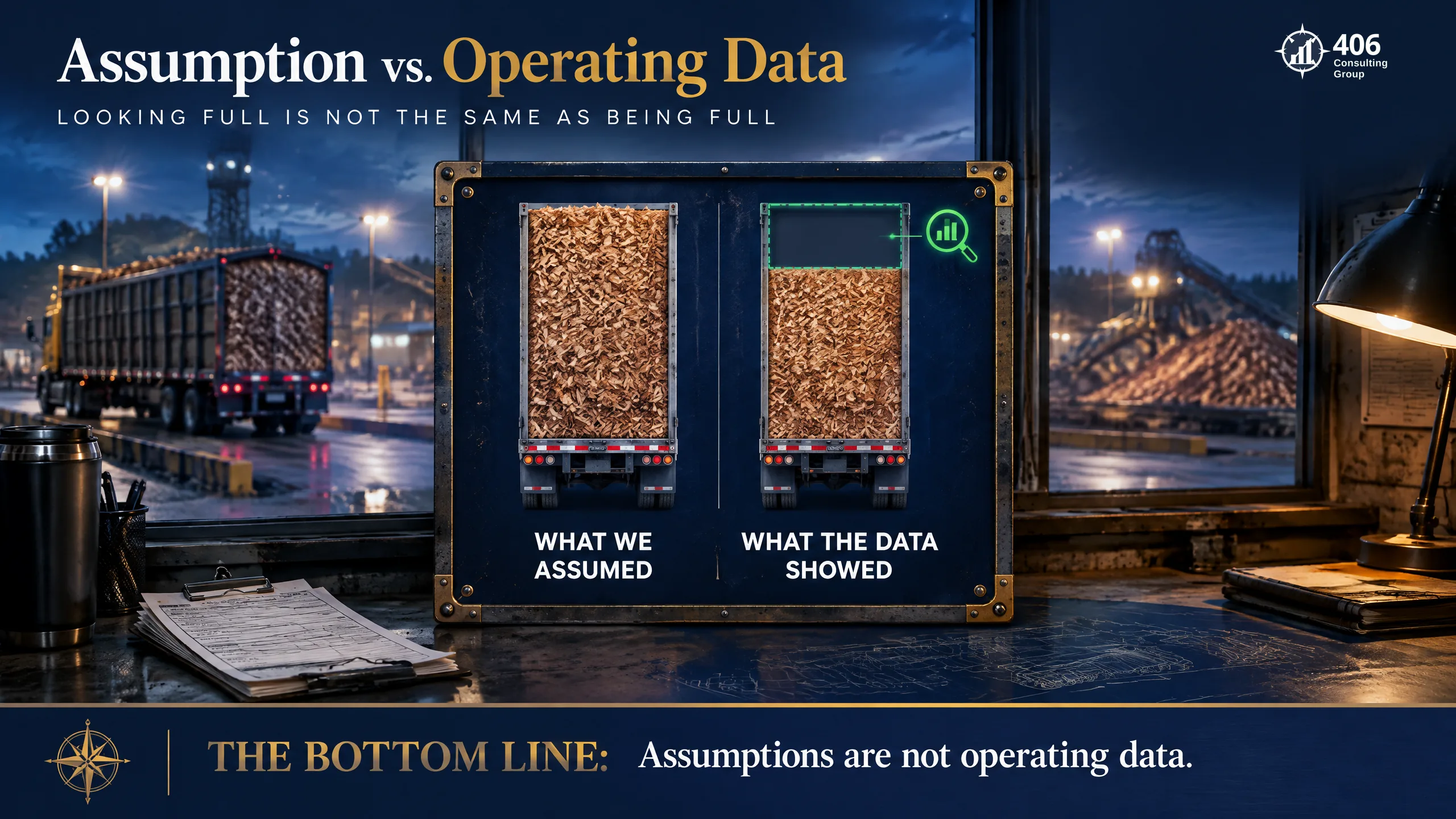
When we reviewed the operating data behind the business — not just the financial statements, but the record of what was actually moving — the picture didn't match the assumption. The loads weren't always full. The gap between "we always run full" and what the data showed was the opening: once you can see that a resource isn't being used the way you thought, you can start asking why, and what it's costing you. None of this was visible from the financial statements alone. It only appeared when the money side and the operating side were looked at together.
And once we started looking closely at the loads, a second, less obvious factor came into view.
The Variable Hiding in the Load
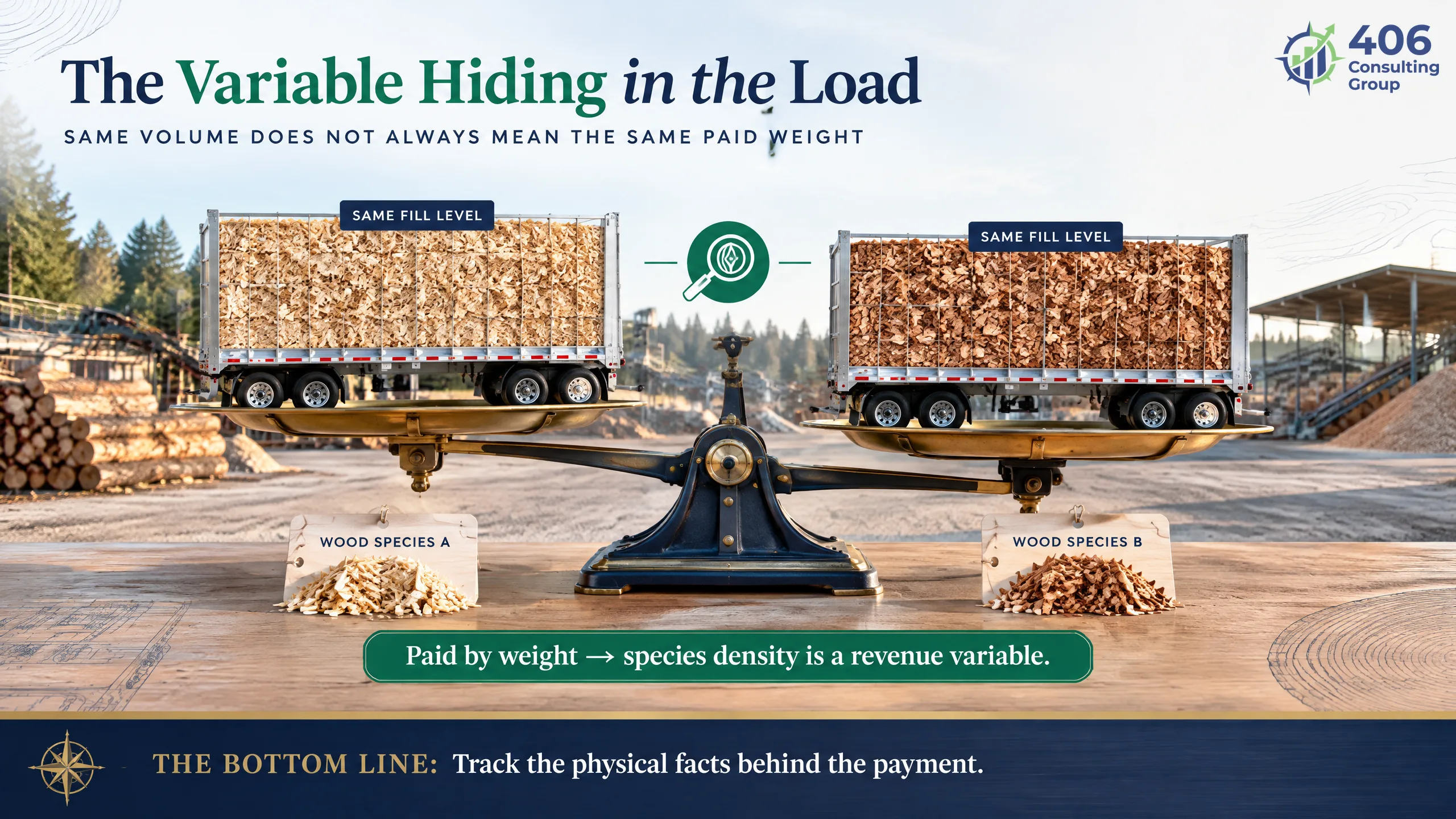
Here's where the operating facts really mattered. The company is paid by weight per load — so what determines the value of a load isn't how full the trailer looks, it's how much that material weighs. And the material varies: different wood species have different densities. A load of one species and a load of another can fill the same space and still not weigh the same. Once you're paid by weight, that difference is not a technicality — it's a direct driver of revenue per load, and it had been sitting in plain sight the whole time, unaccounted for.
When you're paid by weight, a physical property of the material — species density — becomes a revenue variable. The operating fact and the financial result are the same story told twice.
An insight like that is only worth something if it changes a decision. This one changed the contract.
From Insight to Contract
The point of connecting the numbers to the operations isn't to produce an interesting chart — it's to make a better decision. In this case, understanding how species density affected the value of a load became part of the company's contract language. An operating fact that had never been named worked its way into the commercial terms of the business, so the agreements reflected the reality of what was actually being hauled and how it was actually paid for. That's the payoff: an insight that started as a data observation ended up reshaping how the company does business.
Step back from the trucks and sawdust, and the lesson applies to almost every business.
The Bigger Lesson: Books + Operations
Financial records tell you what happened — revenue, costs, margin. But the numbers on their own rarely tell you why, and they almost never tell you what to change. That understanding lives in the operating facts: how a resource is used, what the product or material actually is, how the work is priced, scheduled, and equipped. Financial records become far more valuable the moment they're connected to the operations that drive them.Read alone, the books are a scorecard. Read alongside the operating data, they become a map — showing not just the result, but the lever behind it.

That's not an accounting-only lens; it's a whole-company one. And the levers it reveals are everywhere.
The Operational Variables That Move the Numbers
The trucking story is about load utilization and material density, but every business has its own set of operating variables quietly shaping the financial results. A few that show up again and again:
Load / capacity utilization
Whether the trucks, machines, seats, or hours you pay for are actually being used to their full paid capacity.
Material characteristics
Physical properties of what you sell or move — like density — that change cost or revenue in ways the invoice doesn't show.
Pricing structure
How you're paid — by weight, by hour, by unit, by job — determines which operating facts matter most to your margin.
Dispatch & scheduling
How work is routed and sequenced, including empty miles and idle time that never earn but always cost.
Equipment & assets
What each asset costs to run versus what it produces — the utilization and true cost per unit of output.
Mix & backhaul
The blend of jobs, materials, or routes — and whether you're returning empty when you could be earning.
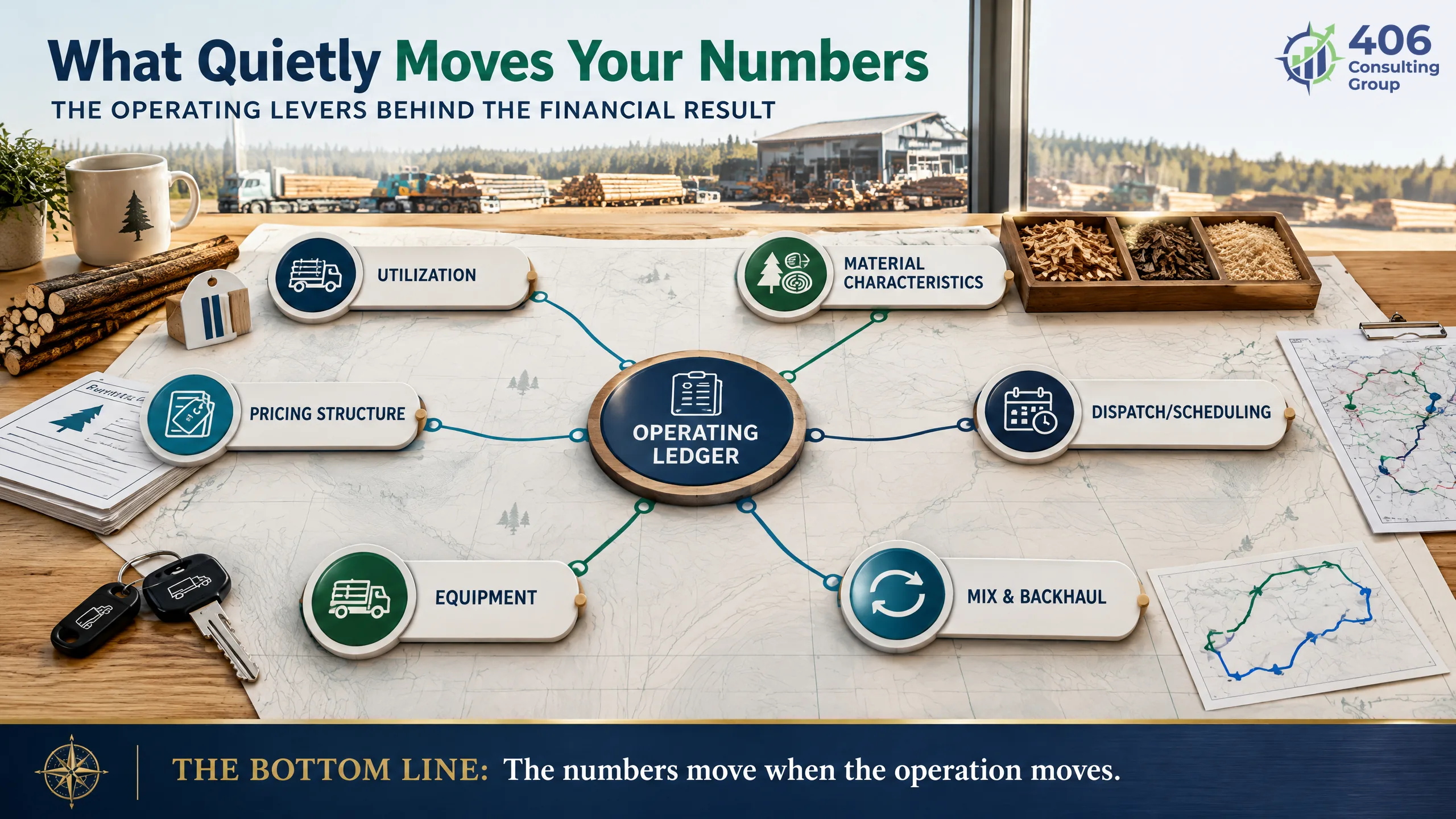
Each of those connects to a line on your financial statements — which is exactly how you find your own version of the trucking insight.
How to Find Your Own Version of This
The method is simple to describe and genuinely powerful in practice: put your financial statements next to your operating dataand, for each meaningful line of revenue and cost, ask what physical fact drives it. What has to be true in the field for that number to be what it is? Then check the assumption against the record. Are the trucks full? Are the machines running? Is every unit priced for what it actually is? The questions are ordinary; the answers are where the money hides. Most owners have never done this because their books and their operations live in separate worlds — and no one is paid to connect them.
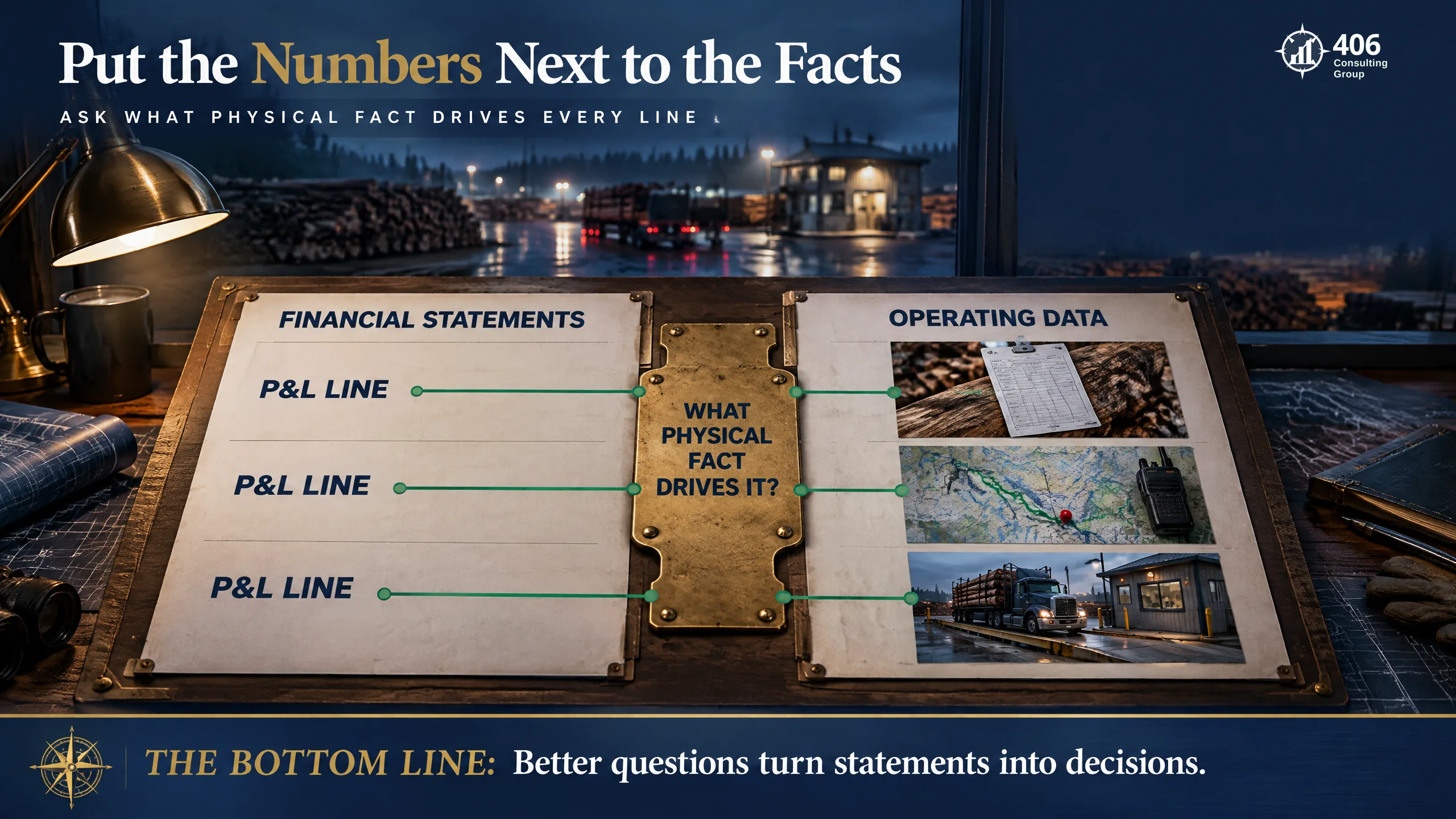
Connecting those two worlds is exactly the work we do.
Look Beyond the Books
A lot of firms will keep your books accurate and file your return. Fewer will look past the books to the operation underneath — and that's where decisions like the one in this story come from. 406 Consulting Group helps owners use their financial and operational information together: we connect the numbers to the facts that drive them, so you can see the levers, not just the results, and make better decisions because of it. Sometimes that means a cleaner month-end. Sometimes it means rethinking a contract.
What is your operating data trying to tell you?
Let's put your financials next to how the business actually runs and find the levers hiding in plain sight — the way we did for the trucking company in this story. Delivered remotely.
For more on running a business by the numbers that matter, see Is Your Business Growing — or Just Getting Bigger? and Good Businesses Run on Processes, Not Heroes.
FAQ: Connecting Financial & Operating Data
What does it mean to connect financial records to operating data?
It means reading your books alongside the record of what your business physically does — units produced or moved, hours worked, capacity used, materials handled — instead of looking at the financial statements in isolation. The financial statements tell you the result (revenue, cost, margin); the operating data tells you why the result is what it is and what to change. Connected, they turn a scorecard into a map. In the trucking example, no financial statement showed that loads weren't always full or that material density affected revenue — that only appeared when the money side and the operating side were reviewed together.
Why do most businesses miss insights like this?
Because their books and their operations live in separate worlds and no one is responsible for connecting them. The bookkeeper records transactions; the operations team runs the work; the tax preparer files the return. Each does their job, and the questions that live in the gap between them — is the capacity we pay for actually being used? does a physical property of our product change what we should charge? — never get asked. The insights aren't hidden because they're complex; they're hidden because looking for them requires deliberately putting the financial and operating pictures side by side, which most owners have never had a reason or a partner to do.
My business isn't trucking — does this apply to me?
Yes. The specifics change, but every business has operating variables quietly driving its financial results: capacity or utilization (are the seats, machines, trucks, or billable hours you pay for actually being used?), the characteristics of what you sell, how you're priced (by hour, unit, weight, or job), scheduling and routing, and the true cost versus output of your equipment. The method is the same everywhere — put the financials next to the operating data and, for each important line, ask what physical fact drives it, then check whether your assumption matches the record.
How does 406 Consulting Group help owners look beyond the books?
We work from a whole-company view rather than an accounting-only lens. That means we don't just keep your books accurate and file your return — we connect your financial information to how the business actually operates, so you can see the levers behind the results and make better decisions. Depending on what the data reveals, that might mean sharper job costing, a pricing change, a scheduling or utilization fix, or — as in the story that inspired this article — rethinking a contract. We do it remotely for clients across the country, and client details always stay confidential.
Watch the Story
60-second version
Beyond the Books
Financials + operations, together.
About the Author
Jason Anderson
Co-Founder, 406 Consulting Group
Jason helps owners connect their financial records to the operating facts that drive revenue and cost — a whole-company view that turns the books into a map, not just a scorecard. Delivered remotely.
Read the Full Story