
The First Number You Check in the Morning:
What Your Instinct Is Really Telling You
Bank balance, pipeline, payroll, or nothing at all — the number you reach for before coffee isn't a habit. It's a tell, and it points at the fear running your business.

Before coffee. Before email. Before the day has a chance to make any demands of you, there's one number you reach for. You might not even notice you're doing it — thumb to the banking app, or the CRM, or the payroll run, or nothing at all. It feels like a habit, the same way brushing your teeth is a habit.
It isn't a habit. It's a tell. The number you check first, before you've decided to check anything, is a readout of the fear quietly running your business — and once you see which one is yours, you can't unsee it. This is about what that instinct reveals, why it's a systems problem and not a discipline problem, and what changes when you fix the right thing.
By Jason Anderson — Co-Founder, 406 Consulting Group. He builds financial infrastructure and business systems for owners who are tired of running their company on a feeling — and has checked all four of these numbers himself.
The Short Version
- →The number you check first isn't a routine — it's a tell, pointing at the fear driving your decisions.
- →Bank balance = survival. Pipeline = scarcity. Payroll = obligation. Nothing = avoidance or mastery.
- →The morning knot isn't fixed by willpower. It's fixed by a system that answers the real question.
- →When the system is right, the number stops being something you flinch at and becomes something you use.
Table of Contents
The Tell
Poker players use the word "tell" for the small, involuntary thing a person does that gives away what they're actually holding — a glance, a swallow, a change in breathing. They can't help it, and they usually don't know they're doing it. The number you reach for first thing in the morning is exactly that: an involuntary move that reveals what you're actually holding, which in a business owner's case is a specific fear.
You didn't choose that number on purpose. That's the whole point. What you check before you've decided to check anything is the truest thing you'll do all day.
There are really only four of them. Three are numbers; the fourth is the absence of one. Each maps to a different fear, and each one shapes how you run the company far more than the mission statement on your wall does. Read the next four sections honestly and one of them will feel like it's describing you specifically. That flinch of recognition is the useful part.

Bank Balance: "Will I Run Out?"
If the first thing you open is your bank balance, the fear underneath is survival. You're asking, in effect, am I still okay? — and you're answering it with the bluntest instrument available. There's nothing shameful about it; almost every owner starts here, because when money is tight the balance feels like the truest number in the business. It's immediate, it's real, and it's terrifying in exactly the way that keeps you coming back to it.
The bank balance is the number that feels most like the truth — and is least like it.
Here's the problem: the balance is lying to you. A meaningful slice of what's sitting in that account isn't yours — it's sales tax you're holding for the state, payroll taxes owed, income tax accruing on profit, vendor bills that haven't cleared. The number that feels like the truth is actually one of the least reliable figures you could pick, because it tells you what's in the drawer, not what you can spend. Owners who steer by it lurch between false relief and genuine panic, and neither feeling is based on anything solid.

The bank-balance checker isn't wrong to care about cash. They're just asking the right question of the wrong number.
Pipeline: "Will the Work Keep Coming?"
If you check the pipeline first — new leads, deals in motion, the calendar of upcoming work — the fear is scarcity. You're asking will it keep coming? This is the growth-minded owner, the hunter, the one who believes deep down that the next sale solves everything. And often it feels like the responsible thing to watch, because revenue is the lifeblood and an empty pipeline is a real threat.
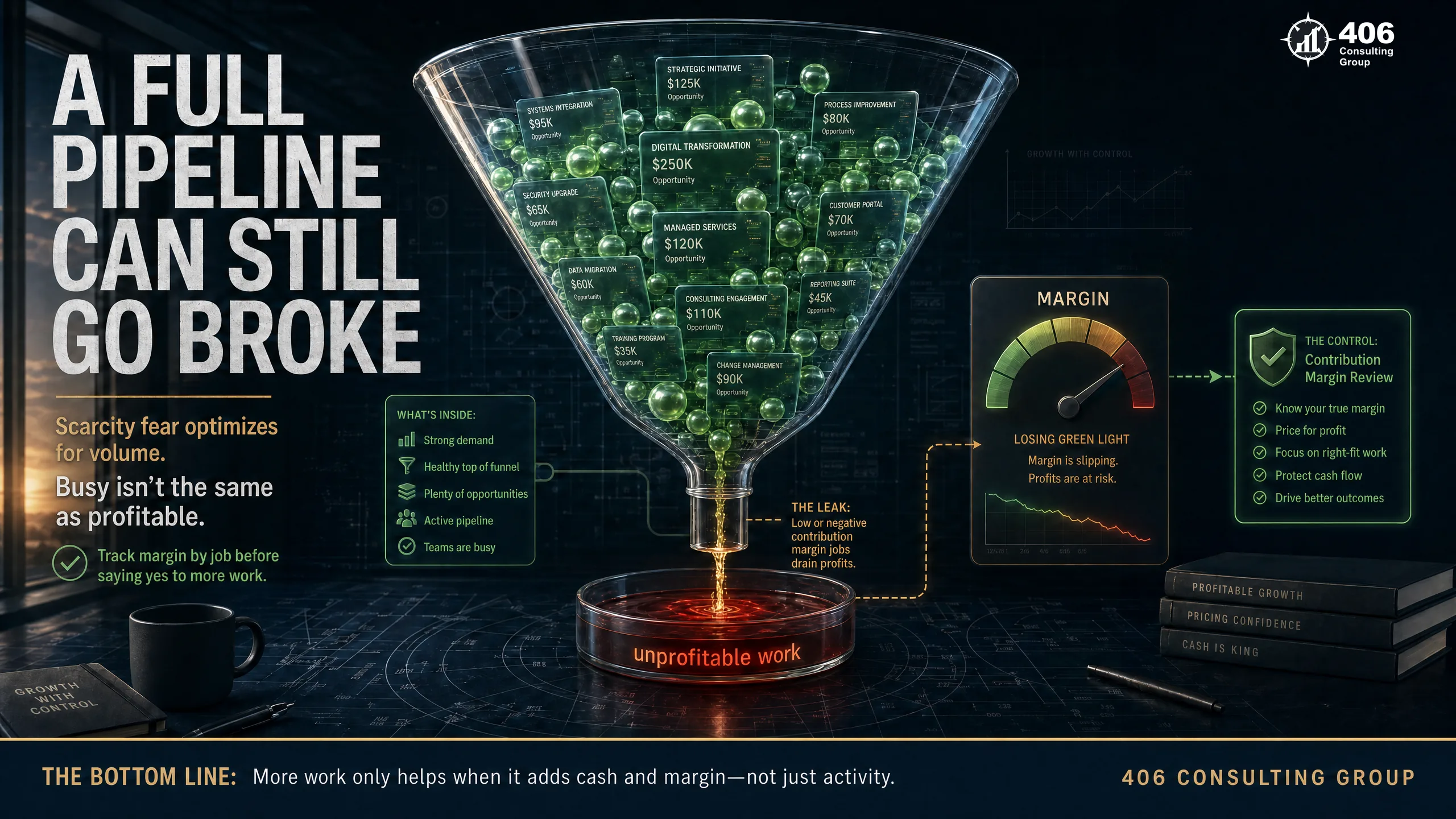
The pipeline checker can feel the growth. What they can't see is the margin — and a full pipeline of unprofitable work is a faster way to go broke than a slow one.
The trap here is mistaking motion for progress. When your eyes go to the pipeline first, you optimize for volume — more leads, more jobs, more revenue — without ever asking which of that work actually builds the business and which of it quietly drains it. Plenty of owners have chased a record sales year straight into a cash crisis, because nobody was watching whether the new work paid. Watching the pipeline feels like offense; without margin visibility, it's often just expensive motion.
Payroll: "Can I Cover Everyone?"
If the number on your mind is the next payroll run, the fear is obligation. You're asking can I cover the people counting on me? This is, quietly, the heaviest of the four. The bank-balance checker is worried about themselves; the pipeline checker is chasing the future; the payroll checker is carrying other people. Every name on that run has a mortgage, a family, a reason they took the job — and you feel all of it in your chest before 7 a.m. on payroll week.
The bank-balance checker fears for themselves. The pipeline checker chases the future. The payroll checker carries other people — and that weight doesn't clock out.
It's the most honorable instinct of the four, and also the one that wears an owner down the fastest, because it's pure downside. There's no version of checking payroll that feels like winning — best case, you covered it again. It's a recurring test you can only pass or fail, and passing just resets the clock to the next one. Owners who live here are often running a genuinely good business; they just can't feel it, because the obligation drowns out everything else.

The weight is real. But the reason it never lifts is that the owner is measuring the obligation without ever seeing the runway behind it.
Nothing at All: The Twist
And then there's the owner who checks nothing. No balance, no pipeline, no payroll — they just start the day. This is the most interesting answer of the four, because it means one of two things that could not be more opposite.
Avoidance
You don't look because you're afraid of what you'll see. The not-knowing feels safer than the knowing. This is the deepest version of the fear — so loud you've stopped listening to it on purpose — and it's where the real trouble hides.
Mastery
You don't look because you don't need to. The system already told you — you have a forecast, a cash-runway number, a weekly rhythm — so the morning holds no surprises. You're not avoiding the numbers; you've made peace with them.
Same behavior. Opposite people. The tell isn't the checking of nothing — it's why. And the honest test is simple: if someone asked you right now how many months of runway you have, would the answer bring relief or dread? The master knows the number cold. The avoider feels their stomach drop. If you check nothing, that question tells you which one you are.

Your Instinct Is Diagnostic
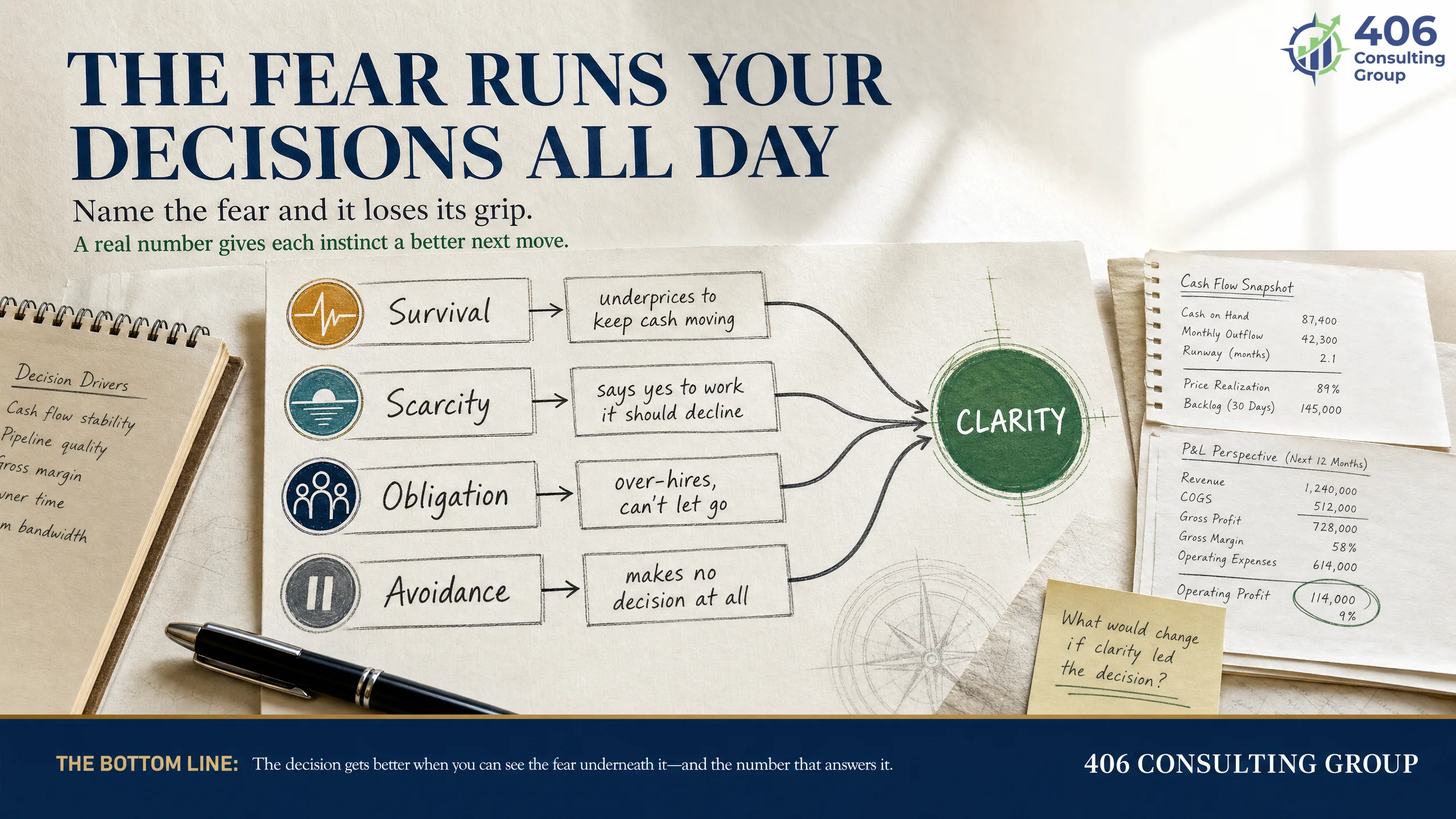
Here's why any of this matters beyond a moment of self-recognition. The fear you check first doesn't stay in the morning — it runs your decisions all day. The survival-fear owner underprices to keep cash moving. The scarcity-fear owner says yes to work they should decline. The obligation-fear owner over-hires, then can't let anyone go. The avoider makes no decision at all, which is its own decision. Your morning tell is the lens the whole day gets filtered through, and most owners have never once named it.
The fear you check first thing doesn't stay in the morning. It prices your jobs, picks your hires, and answers your emails all day long.
Naming it is the first real move. Once you can say "I run this company on a survival reflex" or "I chase revenue because an empty calendar scares me," the reflex loses some of its grip — you can start to ask whether the fear is telling you the truth or just telling you something loud. Almost always, it's loud. The bank balance feels urgent but isn't accurate. The pipeline feels productive but isn't complete. The payroll feels like doom but usually isn't. The fear is real; the number it's attached to is the wrong one.
Which raises the obvious question: if the number you're checking is the wrong one, what's the right one — and why aren't you checking it instead?
The Number Changes When the System Does
The reason you keep reaching for the wrong number is not weak discipline. You're not going to willpower your way out of checking the bank balance. You reach for it because it's the only number you actually have — the balance is right there, and the real answers aren't. Nobody built you the number that would actually calm the fear, so your hand goes to the one that's available.
The morning knot isn't a willpower problem. It's a systems problem. Give the fear a real answer and it stops screaming.
The survival question — will I run out? — has a precise answer: your cash runway, the number of months you could operate if revenue stopped, updated as you go. The scarcity question has an answer too: margin by job or client, so you can see which work to chase and which to turn down. The obligation question resolves into a cash-flow forecast that shows payroll funded weeks out, not discovered on Thursday. None of these are exotic. They're just numbers nobody built for you yet — and once they exist, the morning check changes from a flinch into a glance. You already know roughly what it'll say.
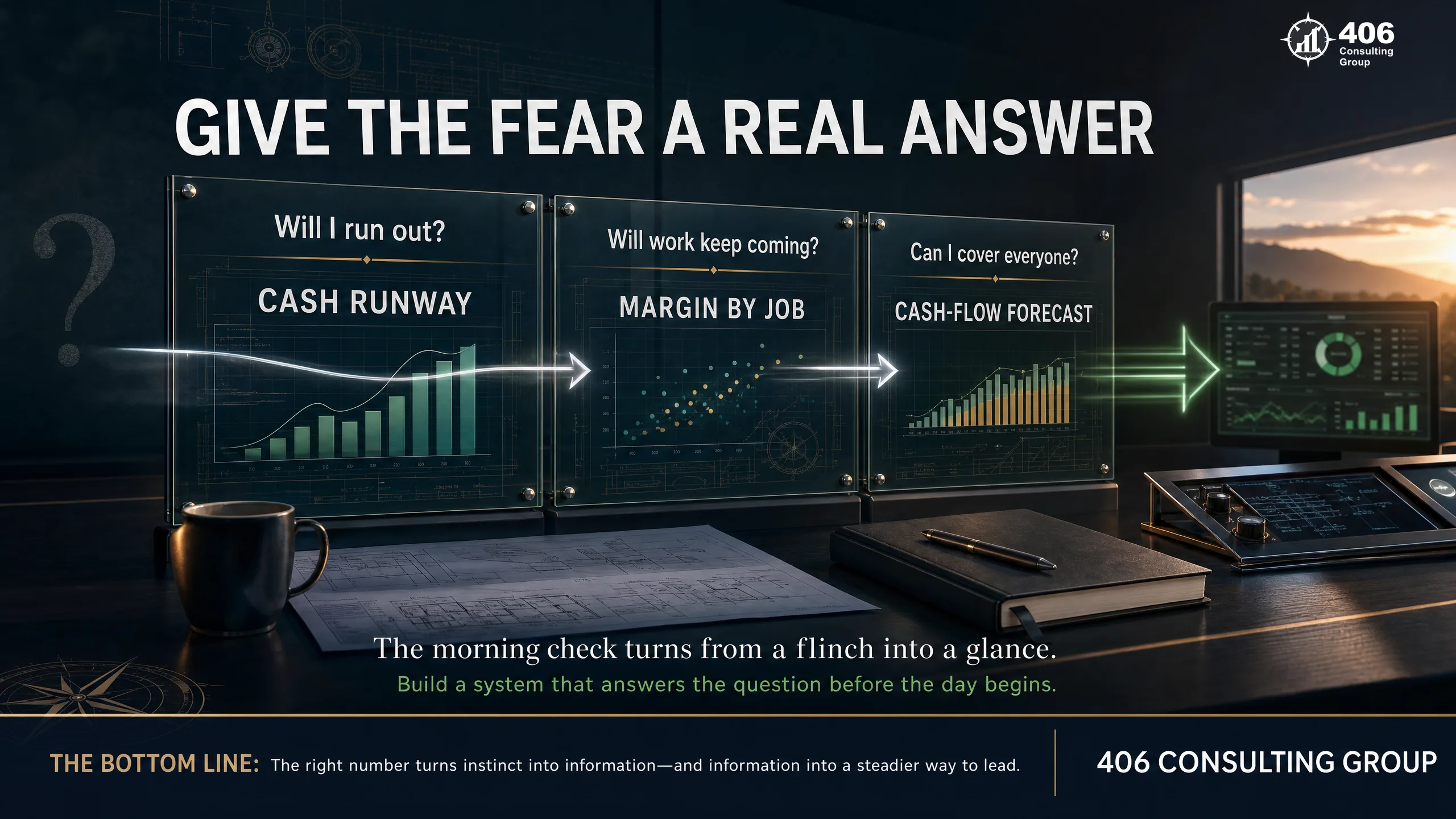
That's the quiet difference between an owner who runs on fear and one who runs on information. It isn't temperament, and it isn't grit. It's whether someone built the financial system that answers the real question — which is the entire climb we map in the Financial Maturity Ladder.
Which One Are You?
So — tomorrow morning, catch yourself in the act. Before you've decided to check anything, notice where your thumb goes.
Bank balance
You're managing survival.
Pipeline
You're managing scarcity.
Payroll
You're carrying obligation.
Nothing at all
Ask the runway question — relief, or dread?
There's no wrong answer to be ashamed of — every owner has a tell, and most have carried the same one for years without naming it. The only mistake is believing it's just a habit, and leaving the fear to run the business from the shadows. Name it, then build the number that actually answers it.
If you're not sure which number you should be checking — or you suspect the "nothing" you check is avoidance wearing the mask of calm — our Financial Maturity Assessment is eight questions and about eight minutes, and it points you at the real one.
FAQ
What does the first number I check in the morning actually reveal?
The fear driving your decisions. Reaching first for your bank balance points to a survival fear ("will I run out?"); the pipeline points to scarcity ("will the work keep coming?"); payroll points to obligation ("can I cover the people counting on me?"); and checking nothing points to either avoidance or mastery, depending on why. It's involuntary, which is exactly why it's honest — you do it before you've decided to, so it reflects what's really on your mind rather than what you'd say if asked.
Why is checking the bank balance a problem?
Because the balance overstates what's actually yours. A chunk of what's sitting in the account is spoken for — sales tax you're holding, payroll taxes, income tax accruing on profit, unpaid bills — so it tells you what's in the drawer, not what you can safely spend. Owners who steer by the raw balance swing between false relief and real panic. The better number is your cash runway: how many months you could operate if revenue stopped, which answers the survival question the balance only pretends to.
Is checking nothing a good sign or a bad one?
It depends entirely on why. If you check nothing because a system already tells you where you stand — a forecast, a runway number, a weekly rhythm — that's mastery, and it's the goal. If you check nothing because you're afraid of what you'd see, that's avoidance, and it's the most dangerous of the four because the fear has gone underground. The quick test: if someone asked how many months of runway you have, would the answer bring relief or dread?
How do I stop running my business on fear?
Not with willpower — with a system. You reach for the wrong number because it's the only one you have; the answer that would actually calm the fear was never built. Cash runway answers the survival fear, margin-by-job answers the scarcity fear, and a cash-flow forecast answers the obligation fear. Once those numbers exist and stay current, the morning check turns from a flinch into a glance. That shift from fear to information is the core of what we do, and it's mapped step by step in the Financial Maturity Ladder.
Keep Reading
Stop Running on a Feeling
Build the Number That Actually Answers the Fear.
406 Consulting Group builds the financial system that turns your morning check from a flinch into a glance — cash runway, margin visibility, and a forecast you can trust. Start by finding out where you stand.
The Four Tells
Which number, which fear
Which Number Should You Check?
Eight questions, about eight minutes.
About the Author
Jason Anderson
Co-Founder, 406 Consulting Group
Jason and the 406 team build the financial infrastructure that turns a business run on gut and fear into one run on information — cash runway, margin visibility, and forecasts owners can actually trust. He's checked all four of these numbers himself.
Read the Full Story