
Bookkeeping Services in Tampa, FL:
No Income Tax Isn't No Complexity
Florida has no personal income tax — but the 5.5% C-corp tax, the county surtax, reemployment tax, and the nation's toughest insurance market still have to be right. The bookkeeping a Tampa business actually needs, delivered remotely — the way 80% of our local clients already work.
Tampa is the fastest-growing major metro in Florida, and the money shows it: healthcare, financial services, a real tech scene, Port Tampa Bay logistics, tourism, and a construction boom feeding all of it — plus a steady stream of companies and families relocating in from the higher-tax Northeast. Florida makes part of it easy with no state income tax. But "no income tax" lulls owners into thinking the books are simple, and they're not: Florida still charges a corporate income tax on one entity type, layers a county surtax on top of sales tax, has its own payroll tax by another name, and sits in the middle of the country's toughest property-insurance market.
This guide walks what makes bookkeeping different for a Tampa business, the Florida tax backdrop you actually have to get right, and how to build books that don't just record the past but help you grow — delivered remotely.
By Jason Anderson — Co-Founder, 406 Consulting Group. Big-firm-trained accountant who builds clean, job-costed, lender-ready books for growing companies — designed from a whole-company view and delivered remotely.
Quick Answer: Bookkeeping for a Tampa Business
- →No state income tax on individuals or pass-throughs — but Florida taxes C-corporations at 5.5%, and adds a county surtax on sales tax.
- →Florida's payroll tax has its own name — reemployment tax (RT-6) — and hospitality adds tip-credit and seasonal-workforce tracking.
- →In a metro building this fast, job costing separates the busy contractors from the profitable ones.
- →Property insurance is a top-three line item in Florida — your books should track it like the major cost it is.
- →It's all remote — and about 80% of our own local clients run the entire relationship that way.
Table of Contents
Why Tampa Bookkeeping Is Different
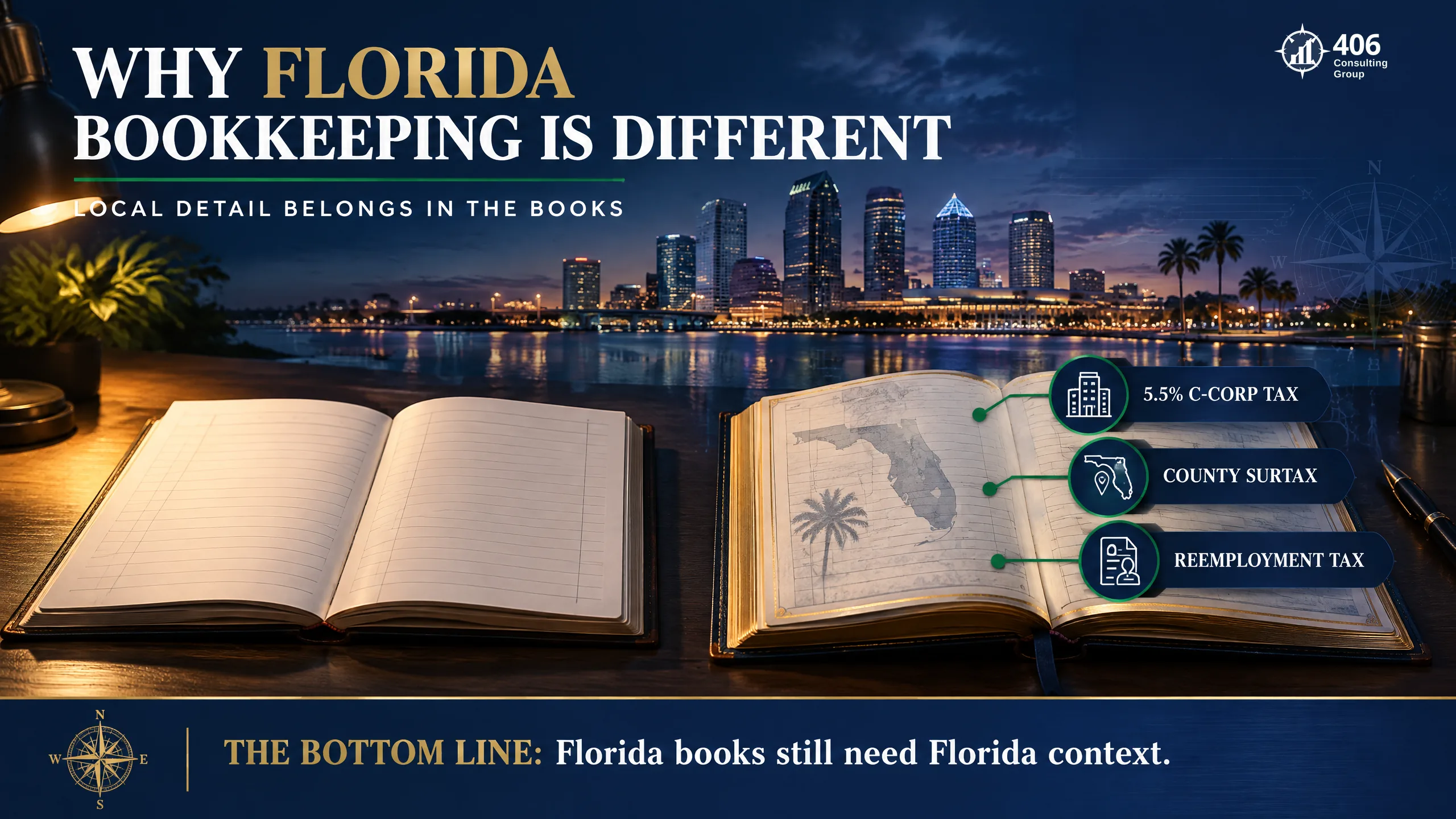
National bookkeeping advice is written for a generic business in a generic state. A Tampa company isn't that. Florida has its own tax machinery — no personal income tax, but a corporate income tax on C-corps, a county surtax on sales, and a payroll tax it calls reemployment tax — and the metro's explosive growth means a huge share of local businesses are contractors and fast-scaling companies whose books have to do more than track deposits. Add the highest property-insurance costs in the country, and a bookkeeper who doesn't know Florida keeps tidy records that are still quietly wrong where it counts.
"No income tax" is not the same as "nothing to get right." Florida just moves the complexity to the corporate tax, the surtax, payroll, and insurance — and your books have to reflect all of it.
Start with the tax backdrop, because it drives how the books have to be built.
The Florida Tax Backdrop
Florida is genuinely tax-friendly, but "friendly" isn't "nonexistent." Here's the picture for a Tampa business:
No personal income tax
No tax on individuals or pass-through owners. Real tax planning is federal — which makes the S-corp election a purely federal play.
5.5% corporate income tax
Florida DOES tax C-corporations at 5.5% — the one entity type that owes state income tax. It shapes the entity decision.
Sales tax + county surtax
State 6% plus a discretionary county surtax — around 7.5% combined in Hillsborough County. Use tax applies to untaxed out-of-state purchases.
Reemployment tax (RT-6)
Florida's name for state unemployment tax, filed on Form RT-6. No state income-tax withholding to run, but this one you do.
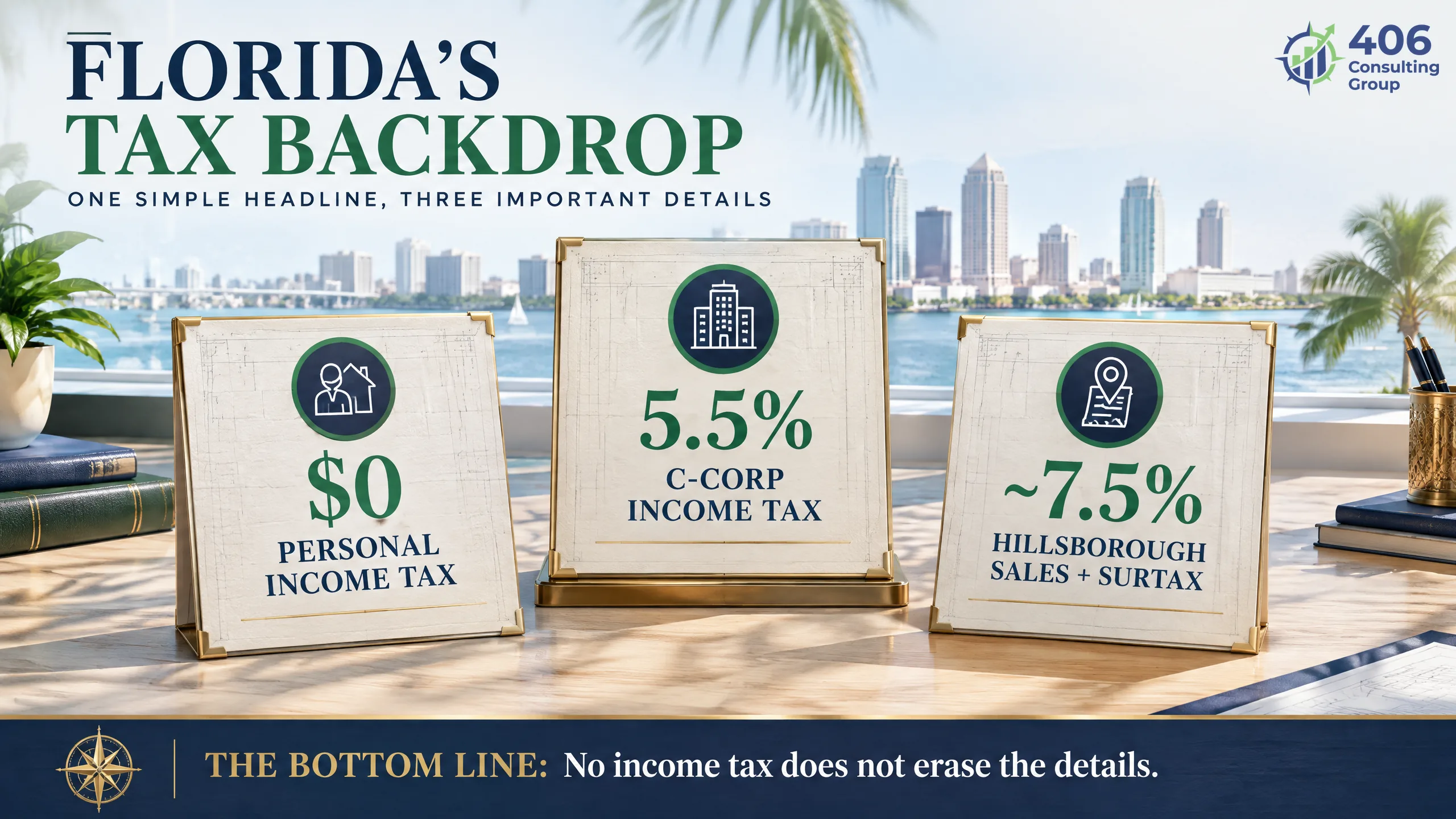
Confirm current rates and surtax with the Florida Department of Revenueand Hillsborough County. One of these surprises owners who assume "no income tax" means none at all.
The One Tax Florida Still Charges
Here's the nuance that catches people: Florida has no personal income tax, but it does levy a 5.5% corporate income tax on C-corporations. Sole proprietors, partnerships, and S-corporations — the pass-through structures most small businesses use — generally don't owe Florida income tax at all. But a business organized as a C-corp does, on top of the federal corporate tax. That single fact can tilt the entity decision, and it's the kind of thing an owner who moved here assuming "Florida has no income tax" discovers only when the return is due. Your books and your structure should account for it on purpose.
Florida taxes exactly one entity type's income: the C-corporation, at 5.5%. Pass-throughs skip it — which makes how you're organized a real Florida tax decision.
Underneath the Florida specifics, the fundamentals still have to be solid.
The Bookkeeping Foundations
The fundamentals don't change at the state line. That means a clean chart of accounts built for your business (not a generic template), bank and credit-card reconciliations every month so the numbers are trustworthy, a clear split between owner and business money, and a real monthly closethat produces statements you can actually use. Get these right and everything else — the corporate tax, job costing, lending — gets easier. Get them wrong and no amount of Florida tax-friendliness saves you.

For Tampa's enormous construction and trades base, one foundation matters more than any other.
Job Costing for the Tampa Boom
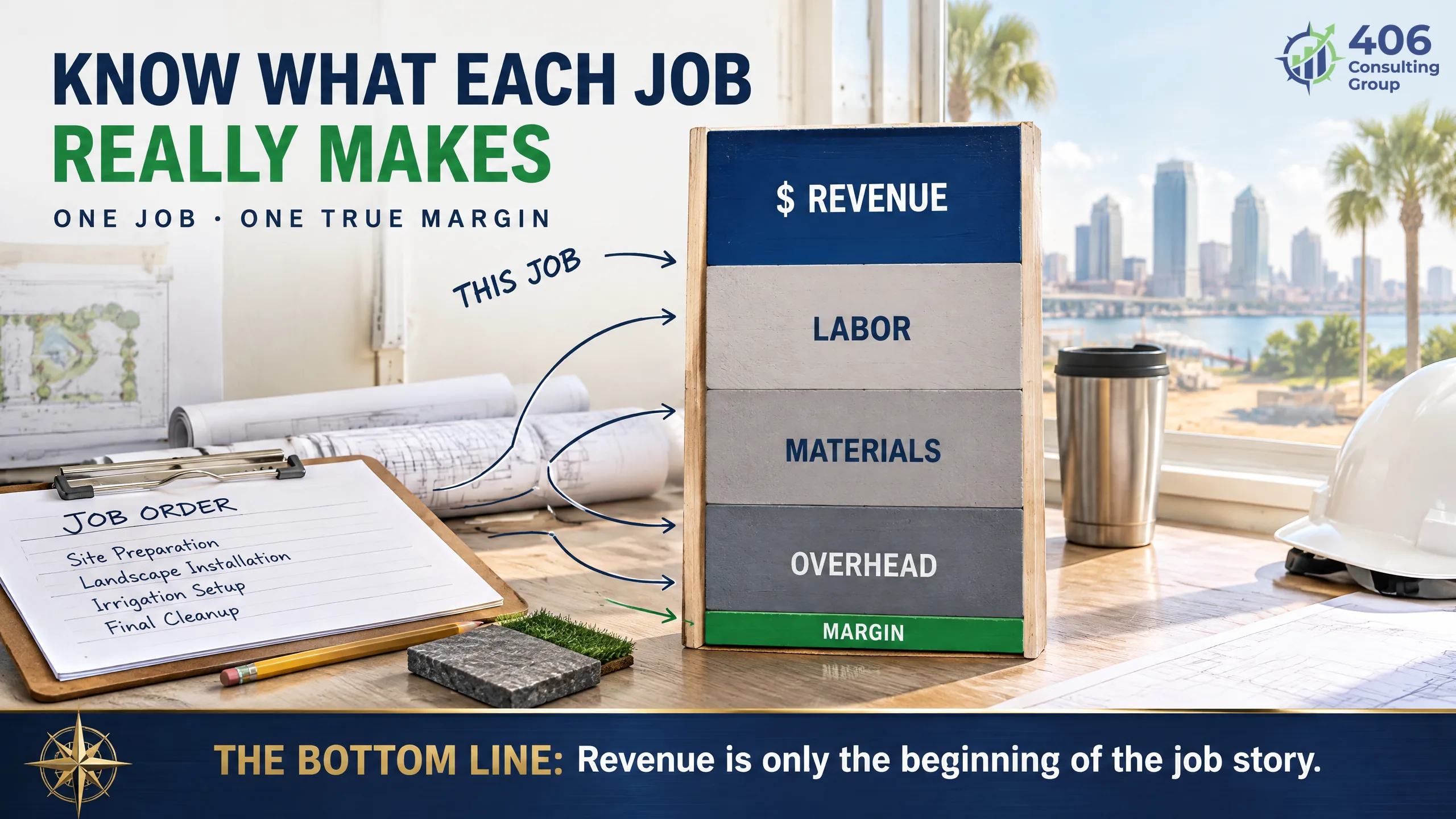
When a metro is growing this fast, it's easy to mistake a full schedule for a profitable one. The tool that tells them apart is job costing— seeing the real margin on each project instead of trusting a single blended P&L. For a builder, that also means tracking work-in-progress, retainage, change orders, and 1099s, so every job's true profit is visible while you can still act on it. A contractor flying on one company-wide number in a boom is the one most likely to grow straight into a cash crisis.
We go deep on that in the Tampa construction accounting guide. Alongside job costing sit the recurring obligations — including one unique to Florida.
Payroll, Sales Tax & Insurance
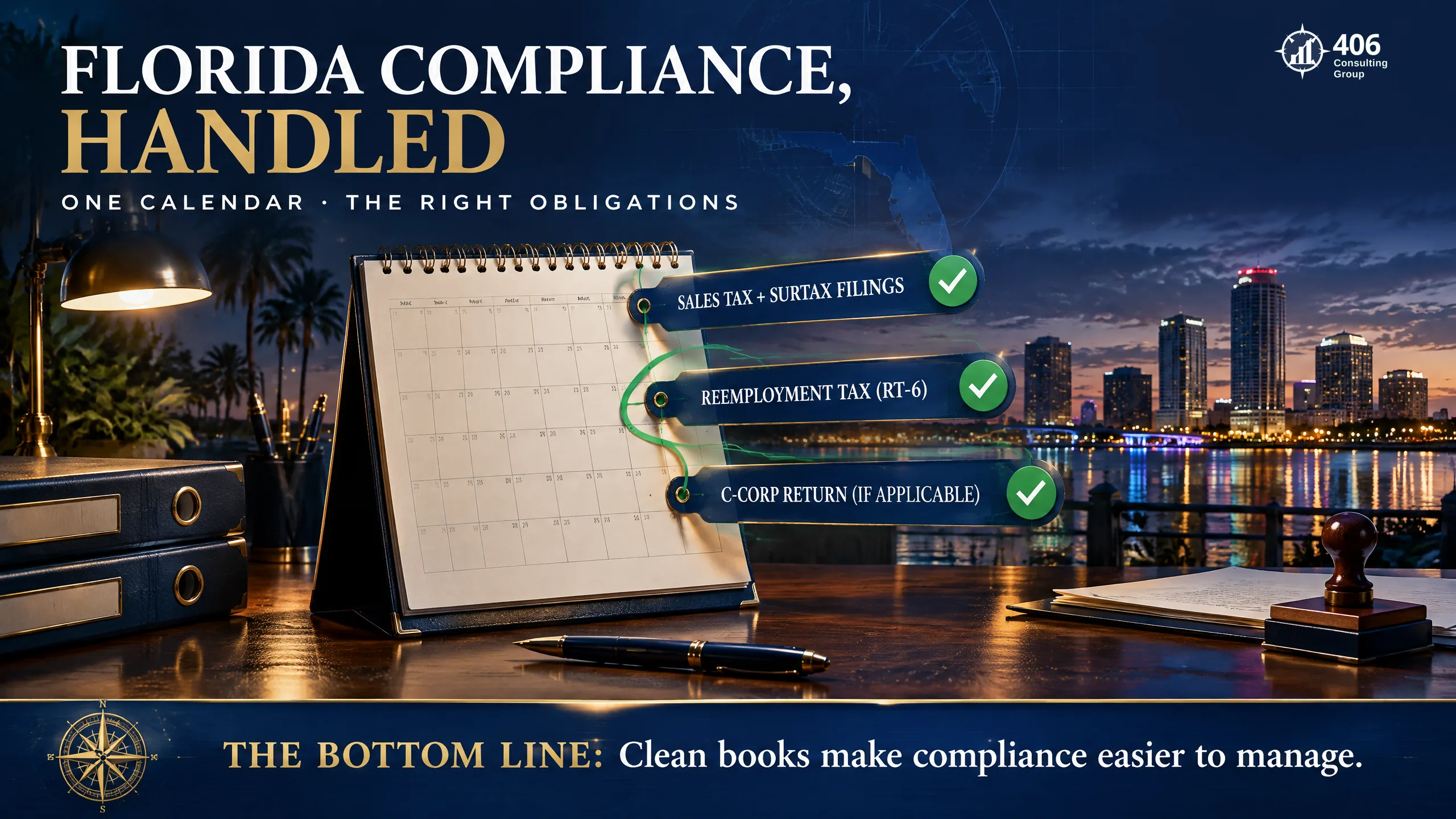
Florida simplifies one thing and complicates others. On payroll, there's no state income tax to withhold, but you file reemployment tax (RT-6), and Tampa's big hospitality sector adds tip-credit and seasonal-workforce tracking. On sales tax, you collect and remit the combined state-plus-surtax rate where it applies and owe use tax on untaxed out-of-state purchases. And there's a Florida line item that dwarfs many others: property and casualty insurance. In the nation's toughest insurance market, premiums are a major, volatile cost — your books should track and forecast them like the strategic expense they are, not bury them in "overhead."
Do all of this well and you get a bonus that pays off the day you need capital.
Books a Lender Will Actually Trust
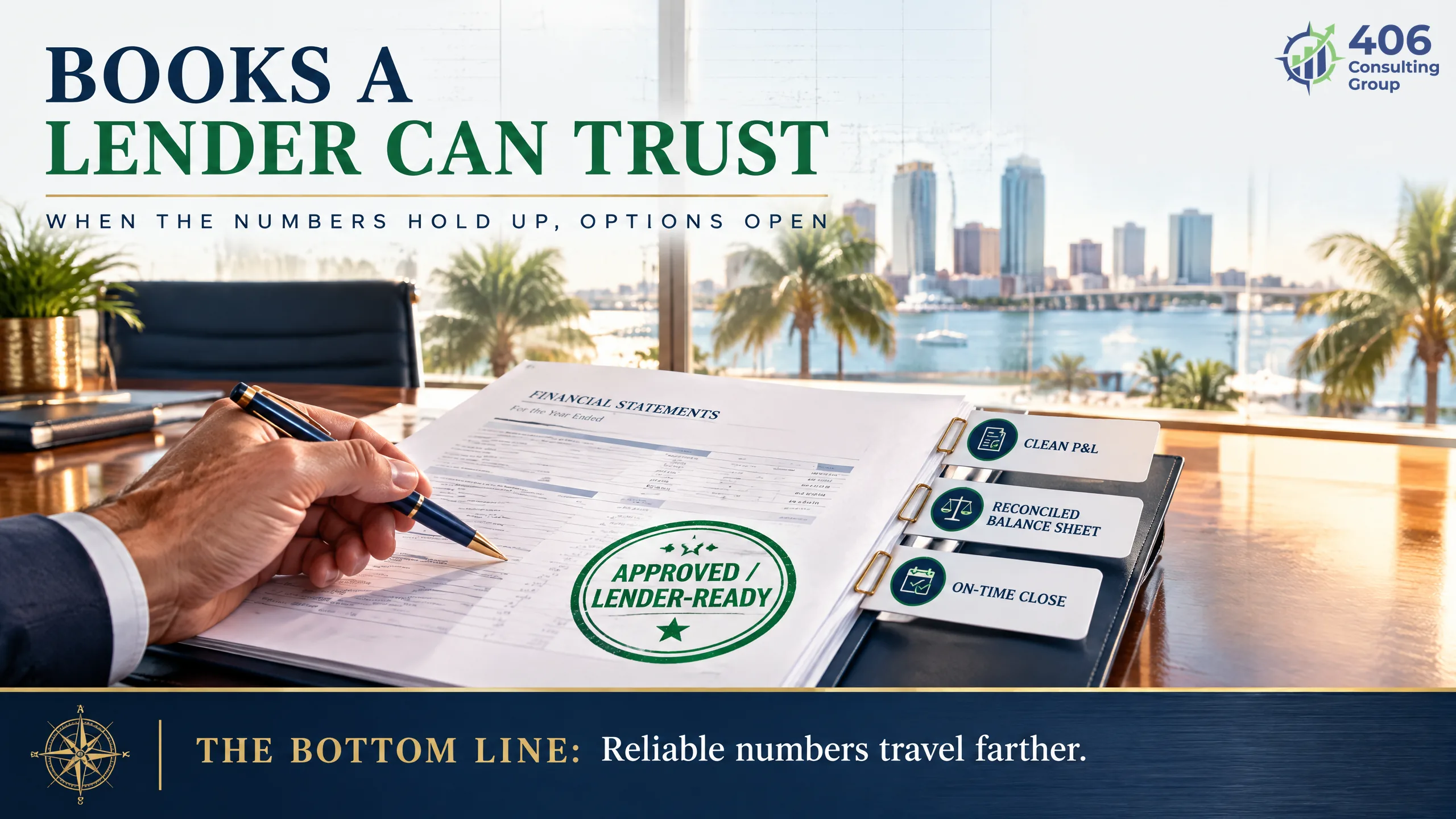
Tampa growth runs on borrowed money — a line of credit, an equipment loan, an SBA deal to fund the next phase. When you ask for it, a lender reads your financials to decide, and messy books answer the question for them: no. Lender-grade books mean a clean separation of business and personal, a readable profit-and-loss that shows true profitability (by job, for contractors), and a balance sheet that supports the request. Because our background is commercial banking and underwriting, we keep your books the way a lender reads them — so when you ask, the numbers say yes.
A busy business with messy books isn't a fundable business. In a fast-growing metro, the quality of your books is often the difference between a yes and a slow no.
And you don't need that bookkeeper down the street to get any of it.
Remote by Default — Even for Locals
It's natural to assume a Tampa business needs a Tampa bookkeeper down the road. Here's the reality that settles it: around 80% of our own local clients handle the entire relationship remotely— they never come into the office. People who could drop by choose screen-shares and a document portal instead, because it's simply how modern bookkeeping works best: secure cloud accounting, live bank feeds, and a steady monthly rhythm. If the clients next door already run it remotely, distance to Tampa is a non-issue.
~80%
of our local clients are fully remote
They never come into the office — the relationship is cloud-based, by choice.
What matters is expertise, not proximity. A great remote bookkeeper who knows Florida's corporate tax, the county surtax, reemployment tax, and construction job costing beats an okay local one who treats your books like any other. We serve Tampa and Florida businesses entirely remotely, and design your books from a whole-company view so the numbers connect to how the business actually runs.
FAQ: Tampa Bookkeeping Questions
Does a Tampa business really pay no state tax?
No state income tax on individuals or pass-through entities — but not no state tax. Florida levies a 5.5% corporate income tax on C-corporations (the one entity type that owes state income tax), a state sales tax of 6% plus a discretionary county surtax (around 7.5% combined in Hillsborough County), use tax on untaxed out-of-state purchases, and reemployment tax on payroll (filed on Form RT-6). There are also transaction taxes like documentary stamp tax on real estate. So the planning shifts from income tax to the corporate tax, sales and surtax, payroll, and federal strategy. Confirm current rates with the Florida Department of Revenue.
Does Florida have a corporate income tax?
Yes — this surprises many owners who move to Florida for 'no income tax.' Florida imposes a 5.5% corporate income tax, but only on C-corporations. Sole proprietors, partnerships, and S-corporations — the pass-through structures most small businesses use — generally don't owe Florida income tax. So while there's no personal income tax, how your business is organized determines whether it owes Florida income tax at all, which makes the entity decision a real Florida tax question worth planning rather than assuming. Confirm your situation with the Florida Department of Revenue or a tax professional.
How much does bookkeeping cost for a Tampa business?
It depends on volume and complexity — transaction count, number of accounts, whether you need job costing, and how many entities and locations you run. A straightforward service business costs less than a growing contractor that needs work-in-progress and retainage tracking across dozens of jobs, or a hospitality business with tipped, seasonal staff. The better way to judge it is return: good bookkeeping pays for itself through cleaner compliance, fewer costly mistakes, and books a lender will actually fund. The most expensive option is usually the cheapest bookkeeper who mishandles the surtax, reemployment tax, or your job costing.
Do I need a bookkeeper who is physically in Tampa?
No — and most businesses that assume they do are surprised to learn how we already work. Around 80% of our own local clients handle everything remotely and never come into the office. Modern bookkeeping runs on cloud software, live bank feeds, and screen-share reviews, so the work happens the same whether your bookkeeper is in Tampa or across the country. What matters is expertise in Florida's rules — the corporate tax, the county surtax, reemployment tax, construction job costing — and responsiveness. A great remote bookkeeper who knows those beats an okay local one who doesn't.
Can 406 Consulting Group do my Tampa bookkeeping remotely?
Yes — we provide full-service remote bookkeeping for Tampa and Florida businesses: a clean chart of accounts, monthly reconciliations and close, job costing for contractors, sales-tax and surtax support, reemployment tax, and insurance-cost tracking built in. Our commercial-banking background means we keep your books the way a lender reads them, and we design your financial systems from a whole-company view rather than a narrow accounting lens. The vast majority of our clients — including local ones — never step into an office.
Florida Tax Snapshot
What a Tampa business faces
Tampa Bookkeeping
Clean, Florida-aware, remote.
About the Author
Jason Anderson
Co-Founder, 406 Consulting Group
Jason builds clean, job-costed, lender-ready books for growing companies — designed from a whole-company view and delivered remotely to Tampa and Florida businesses.
Read the Full Story